That meant there was no need to exaggerate.
The strongest response to misconduct is often the least theatrical one:
preserve exactly what happened and allow the record to become difficult
to deny.
PART 16
The emergency caller became another major question.
Investigators determined the call had not originated inside Magnolia
House. The caller had described armed Black men and claimed immediate
danger.
Rumors spread online. Some blamed neighbors. Others blamed political
opponents. Some invented elaborate conspiracies involving my office.
I refused to speculate publicly.
We had evidence of a false report.
We did not yet have evidence supporting every theory about motive or
identity.
That distinction frustrated people who wanted an instant villain.
But I had spent my career warning juries that suspicion is not proof.
Being angry did not release me from that principle.
PART 17
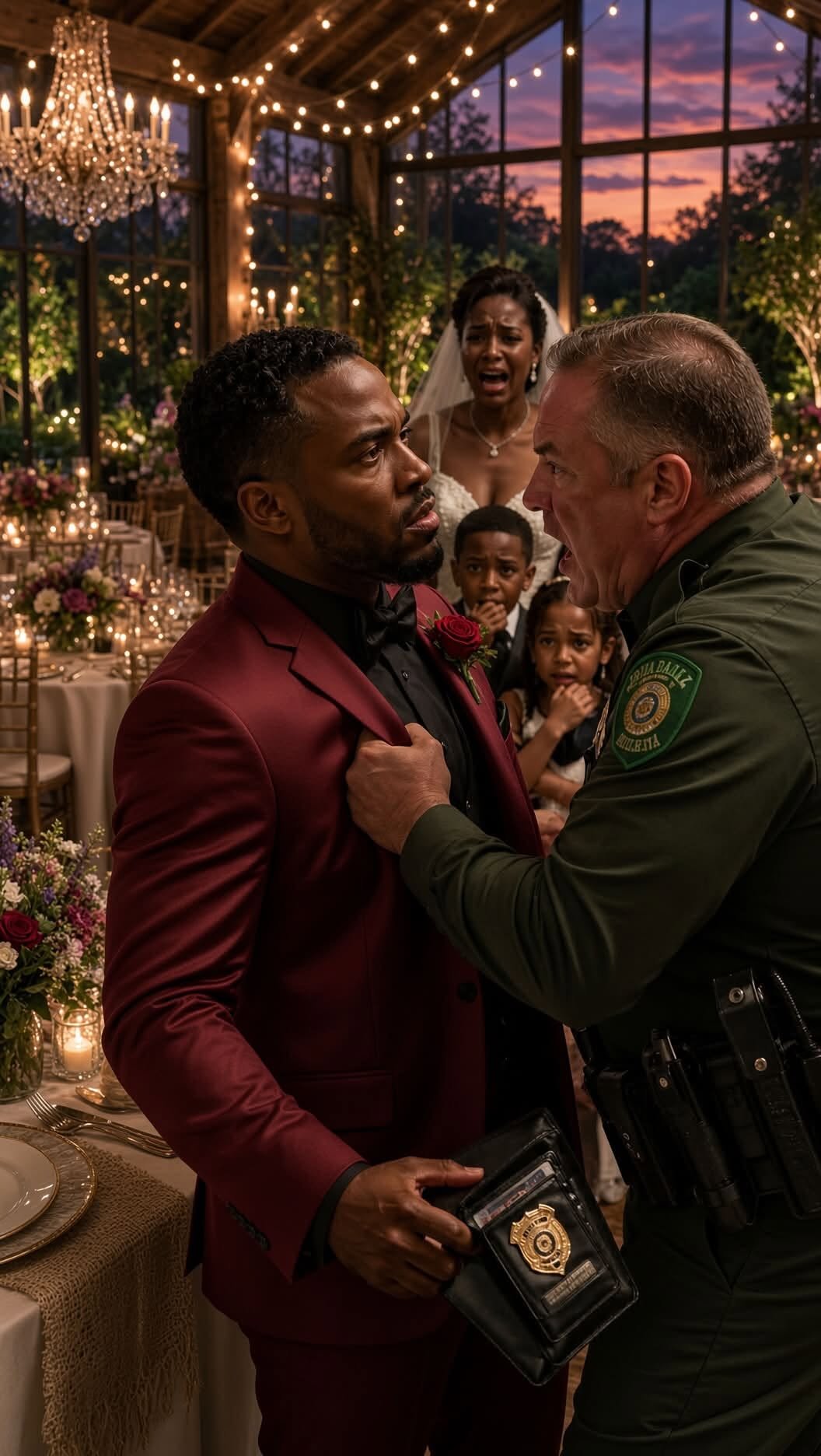
Mercer’s body camera became especially important.
Before entering the ballroom, another officer could be heard asking
whether they had confirmation of weapons.
Mercer answered, “We’ll find something.”
Investigators considered that statement alongside the rest of the
record.
Officer Price’s camera showed a different perspective. She asked for
clarification and stated she had not seen a weapon.
Not every officer behaved identically.
That mattered.
Accountability required examining individual actions, not treating
uniforms as interchangeable.
Fairness cannot be something we demand only when it benefits us.
PART 18
Some people online hated that distinction.
They wanted all eight officers treated as equally responsible because
all eight entered the venue.
But evidence showed differences.
Some followed Mercer aggressively. Some questioned commands. One
officer’s language drew separate scrutiny. Others were not shown
participating in the most serious conduct.
Price had tried to slow escalation and later assisted Grandpa.
An honest investigation had to preserve those differences.
The point was not to soften what happened.
The point was to make the conclusions strong enough to survive scrutiny.
PART 19
Investigators eventually identified the person connected to the false
report through records and corroborating evidence.
He was a local man who had previously complained online about the estate
hosting Black events.
Authorities handled the matter through ordinary legal procedures outside
my personal control.
I did not call prosecutors demanding a result.
I did not publish his address.
I did not turn his family into targets.
Evidence had to be tested. He was entitled to counsel.
Due process is easiest to support when it protects people we like. Its
real test comes when it protects people who anger us.
PART 20
The review of Mercer took months.
Investigators synchronized body-camera timestamps with venue footage.
They interviewed guests. They examined dispatch information, training
records, and prior complaints.
Some older complaints had been substantiated in part. Others had not.
The viral clip was powerful evidence.
It was not the entire case.
That frustrated the public and sometimes frustrated me.
But speed is not integrity.
A process worth trusting cannot simply produce the outcome the loudest
audience demands.
PART 21
I testified as a witness.
That was strange.
I was accustomed to asking questions, not answering them.
Where were your hands?
What exactly did Mercer say?
Did you identify yourself before or after he shoved you?
Did your grandfather threaten anyone?
Did you hear anyone announce the reason for entry?
I answered carefully.
When I did not remember, I said so.
When video showed something more accurately than my memory, I deferred
to the recording.
Credibility is not pretending memory is perfect.
It is refusing to improve the story merely because the truth already
supports you.
PART 22
Rebecca testified too.
Afterward she said, “I understand why people don’t report things.”
The repetition exhausted her. Forms. Interviews. Recounting the same
frightening hour to strangers.
Accountability systems can demand enormous energy from people already
harmed.
That realization later influenced conversations about complaint
procedures, though I waited until my personal matter was properly
separated from my office before taking part in policy discussions.
I did not want our wedding to become an excuse for me to write rules
around my own anger.
PART 23
Grandpa became the reluctant public symbol of the incident.
He hated it.
“I was standing there,” he said. “That doesn’t make me a movement.”
When Sarah finally interviewed him, she asked what he had thought while
Mercer pushed him toward the wall.
Grandpa answered:
“I wondered whether that captain understood how much damage one person
in authority can do to public trust.”
Then he added something people quoted less often:
“One bad captain is not the whole institution either.”
Grandpa had spent a lifetime studying history. He distrusted both denial
and simplification.
PART 24
The eventual administrative findings were serious.
Mercer was found to have violated multiple departmental standards,
including rules related to professional conduct and discriminatory
behavior. Other officers received findings based on their own actions.
Some allegations against some officers were not sustained.
The false-report matter proceeded separately through the justice system.
Civil claims also followed.
None of those outcomes happened because I flashed a business card.
They happened because recordings, witnesses, dispatch logs, and
independent review created a record that could be examined.
The card produced a dramatic moment.
Evidence produced consequences.
PART 25
That distinction became the lesson people kept missing.
The viral version was simple: racist captain attacks Black groom,
discovers groom is attorney general, and suddenly realizes he chose the
wrong victim.
But if I had been a teacher, mechanic, nurse, delivery driver, or
unemployed father, Mercer’s conduct would not have become more
acceptable.
My title made the incident more newsworthy.
It did not make my dignity more valuable.
The real failure was that Mercer needed a title before reconsidering the
assumptions he had made about me.
PART 26
For months, I avoided watching the footage unless counsel required it.
The hardest moment was not Mercer shoving me.
It was a little boy in a navy suit moving behind his mother when
officers entered.
At a family gathering later, he asked whether police were allowed to
ruin weddings.
“No,” I said.
“Then why did they?”
“Some people with authority make wrong choices.”
“Did they go to jail?”
I explained, as simply as I could, that different conduct can have
different consequences and evidence has to determine what is supported.
He frowned.
“That’s complicated.”
“Yes.”
“Why?”
“Because fairness has to work even when we’re angry.”
Then he asked for cake.
PART 27
We eventually held a smaller second reception.
Not because the first marriage was invalid. Rebecca simply wanted one
evening where nobody remembered sirens.
Grandpa wore the same suit and refused to repair the damaged collar.
“It has history now.”
The band played the song we had originally chosen for our first dance.
Grandpa stole the microphone.
“I have one rule tonight. Nobody discusses police, politics, lawsuits,
investigations, or Benjamin’s job.”
Everyone applauded.
Then he added:
“Unless it makes Benjamin uncomfortable.”
The room exploded with laughter.
That reception did not replace the first.
It gave us another memory to place beside it.
PART 28
Ordinary life slowly expanded.
Rebecca and I traveled. Dad resumed complaining that I worked too much.
Grandpa continued giving unsolicited legal theories despite never
attending law school. Sarah returned to reporting stories unrelated to
us.
Occasionally someone recognized me in an airport and called me “the
wedding guy.”
At first I resented it.
Then I realized the story opened an important conversation about status.
People loved the moment Mercer read my card because it reversed the
power dynamic.
Dramatically, I understood the appeal.
Ethically, the lesson bothered me.
Be careful whom you mistreat because he might be powerful is not
justice.
Do not mistreat people is.
PART 29
One year after the wedding, Rebecca and I returned to Magnolia House for
dinner with family.
The venue manager had saved a photograph.
Grandpa and Grandma were dancing after the officers left. His collar was
crooked. Rebecca stood behind them. I was holding her hand.
Sarah joined us briefly.
Grandpa thanked her for keeping the camera pointed when the scene became
frightening.
Rebecca looked toward the garden.
“For a while I hated this place,” she said.
“And now?”
“Now I remember the dancing.”
That was Grandpa’s victory.
Not erasing the intrusion.
Refusing to let it own the entire memory.
PART 30
Later, at a legal ethics conference, someone asked whether I had been
tempted to use my office to punish Mercer personally.
I answered that anger and authority are a dangerous combination.
“The test of public power is not whether you can use it against someone
who wronged you. The test is whether you can preserve a process that
would be fair if your name were not on the complaint.”
I thought about the business card that had gone viral.
Strangers treated it like the hero of the story.
It was not.
The card shocked Mercer because he had already decided what kind of man
stood in front of him.
His greatest mistake was not failing to recognize an attorney general.
It was believing there were people in that ballroom who did not deserve
recognition as human beings.
EPILOGUE
On our second anniversary, Grandpa tapped his cane against the
restaurant floor and asked whether I still carried the same business
cards.
“Yes.”
“Good.”
“Why?”
“So you can pay for dinner.”
“That is not how business cards work.”
“Then your government job is useless.”
Rebecca laughed.
I looked around the table.
Dad was arguing with Grandma about dessert. Sarah was checking her
phone. Rebecca’s mother was showing someone wedding photographs.
Life had become ordinary again.
I had spent my career thinking about power through statutes, offices,
investigations, and courtrooms.
Our wedding taught me to think about it differently.
Power was Captain Mercer entering a ballroom convinced nobody there
could challenge his story.
Power was also a reporter keeping a camera pointed at what happened.
It was a younger officer asking questions rather than blindly
escalating.
It was a supervisor preserving evidence.
It was independent investigators reviewing records.
It was guests willing to give statements even when repeating the story
hurt.
It was Rebecca telling me to stop being an attorney general for thirty
seconds and simply be her husband.
And it was Grandpa, collar wrinkled, walking back onto the dance floor.
The business card did not save our wedding.
People did.
Evidence did.
Procedure did.
Courage did.
For weeks after the incident, strangers mailed joke cards to my office.
Some read:
SURPRISE. WRONG GROOM.
Others said:
CHECK THE WALLET FIRST.
I disliked them all.
They implied Mercer’s real mistake was choosing an important victim.
It was not.
The people in that ballroom had dignity before anyone knew what was
printed in my wallet.
The little boy hiding behind his mother had dignity.
The caterers had dignity.
The musicians had dignity.
Grandpa had dignity before anyone knew his grandson’s job.
That became the part of the story I repeated whenever anyone asked what
I wanted remembered.
No résumé required.
No title required.
No livestream required.
No influential witnesses required.
A badge gives authority.
It does not create a hierarchy of human worth.
And a business card should never be the reason someone decides to treat
you like a person.
Years later, the photograph from the reception still sits in our home.
Grandpa and Grandma are dancing.
His collar is crooked.
Behind them, Rebecca is laughing.
You cannot see the police.
You cannot see the livestream.
You cannot see me holding a government title.
You see a family at a wedding.
That is exactly why I kept it.
Because in the end, the most important thing we reclaimed that night was
not power.
It was the right to be ordinary.
AFTERWORD
There is one detail the viral clips never captured.
After the officers left and before the music restarted, Officer Lena
Price returned alone to the edge of the ballroom.
She had permission to retrieve equipment left during the confusion.
Grandpa saw her.
She hesitated.
Then she approached him.
“Sir, I’m sorry you were frightened.”
Grandpa studied her.
“You didn’t put me against the wall.”
“No.”
“You asked him questions.”
“Yes.”
“Keep doing that.”
She looked surprised.
Grandpa pointed at her badge.
“That thing does not require you to stop thinking.”
Price nodded.
They spoke for less than a minute.
I never used that conversation publicly while the review was active
because I did not want to influence how anyone interpreted her conduct.
Later, after the investigation, Grandpa mentioned it to Sarah.
For him, that exchange mattered because it complicated the night.
Institutions are made of people.
Some misuse authority.
Some comply too quickly.
Some hesitate.
Some question.
Some correct.
If reform means anything, Grandpa said, it has to make room for those
differences while still confronting harm directly.
That was harder than a slogan.
It was also more useful.
Rebecca and I eventually stopped discussing the wedding every week.
Then every month.
One day I realized half a year had passed without either of us
mentioning Mercer.
That felt like freedom.
Not forgetting.
Freedom.
The incident remained part of our marriage story, but it was no longer
the organizing principle of our marriage.
We had bills.
Anniversaries.
Arguments about paint colors.
Sunday dinners.
Family illnesses.
Vacations.
Ordinary disappointments.
Ordinary happiness.
That is what harm often threatens to steal after the event itself is
over: the ability to experience normal life without translating
everything back into the worst day.
We refused to give it that much territory.
And when people still ask me about the moment I handed Captain Mercer my
card, I tell them the same thing.
Watch what happened before the card.
That is the important part.
Watch how he spoke when he believed nobody in the room had power over
him.
Watch how assumptions shaped his behavior before he knew a single
person’s name.
Then watch what changed after he read a title.
The contrast explains the problem better than any speech I could give.
Respect that appears only after status is revealed is not respect.
It is calculation.
The goal should never be to make sure every mistreated person has a
powerful business card.
May you like
- I came home eleven months early without telling anyone and found my wife sitting against a wall with her head shaved and her face bruised, while my mother shouted at me to throw her out
- I Married a Blind Man So He’d Never See My Scars On Our Wedding Night, He Revealed the 20-Year Secret Behind the Explosion
- I lost my hotel job when a rich guest accused me of taking her $5,000 diamond ring. The next morning a security guard rang me: “Come back. You need to see what that woman left behind for you.”
- Eight Months Pregnant, My Husband Shoved Me Out of the Car onto the Shoulder of the Highway and Said, “You’re Bad Luck. You Don’t Deserve to Sit in This Car.” He Never Knew I’d Already Found Out About His Other Wife.
- MY HUSBAND HURT ME FOR REFUSING TO LET HIS MOTHER
The goal is to build systems and habits in which the card does not
matter.
See more on the next page