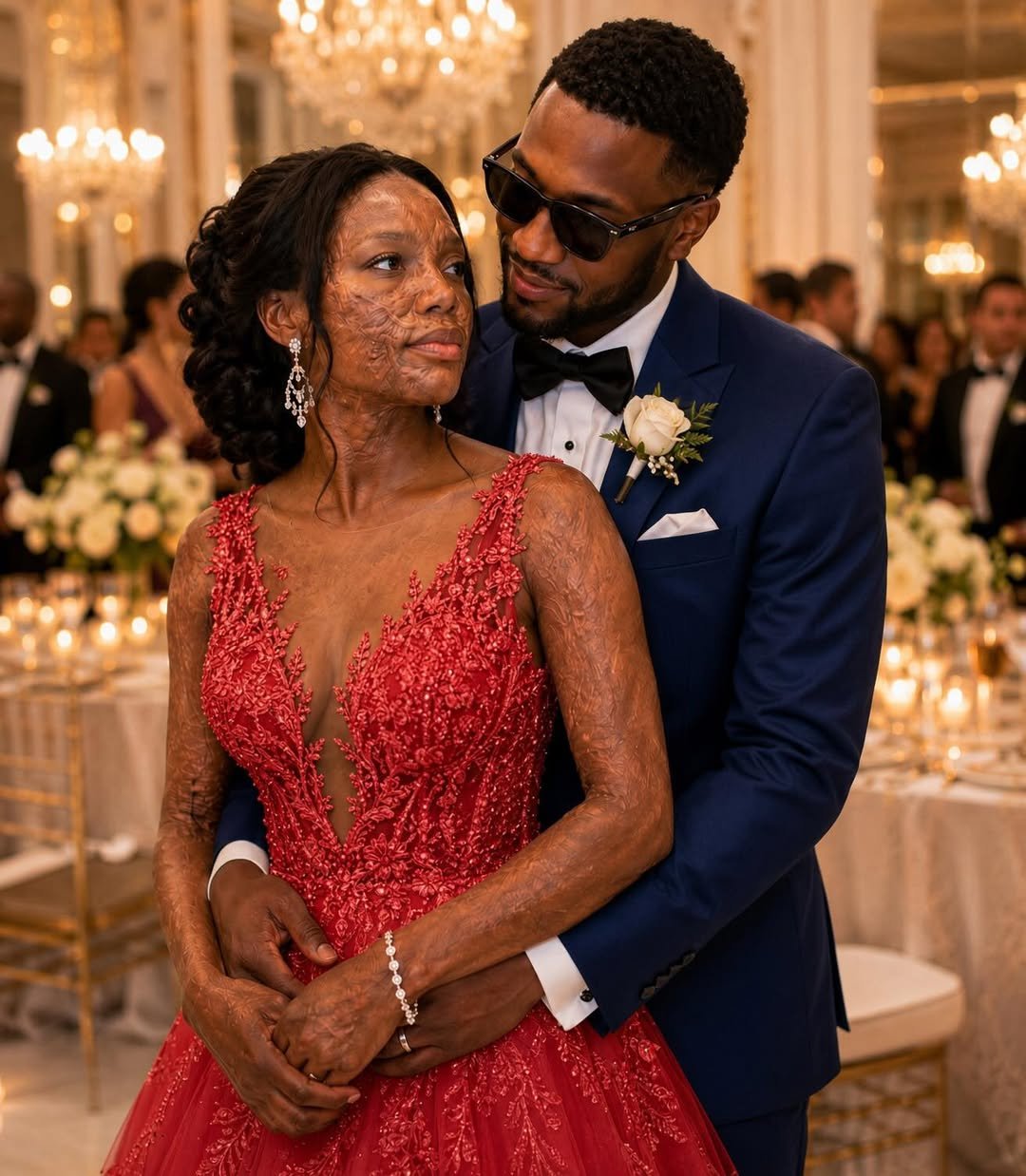
My sister Lena opened her door at two in the morning and saw me still
wearing my wedding dress.
She did not ask questions.
Not immediately.
She helped me remove the veil.
Made tea.
Then I told her.
By sunrise, my father was there.
I handed him Thomas Ward’s confession.
Dad read the first page.
Then sat down.
His face became gray.
“I knew that name.”
“What?”
“Thomas Ward.”
Dad remembered the subcontractor.
He remembered missing records.
He remembered reporting concerns after the explosion.
But investigators found no evidence proving intentional sabotage.
The company claimed Thomas had completed ordinary work days earlier.
Dad had always believed negligence was involved.
He had never known Thomas entered our house that night.
PART 14
My father looked at me.
“Where did you get this?”
“Elias.”
He closed his eyes.
“He knew?”
“For twenty years.”
Dad stood so fast the chair scraped backward.
“I’ll kill him.”
“No.”
“He married you knowing this?”
“Yes.”
“I’m going over there.”
“No.”
“Mara—”
“No.”
I was furious at Elias.
But I would not turn fury into violence.
We contacted an attorney instead.
Then the police records unit.
The original case was old.
Thomas was dead.
Evidence had disappeared.
The maintenance company no longer existed under the same name.
A confession written by a deceased person raised authentication
questions.
There would be no dramatic arrest.
But there could still be truth.
That became my first goal.
PART 15
A forensic document examiner later found strong support that Thomas
wrote the confession.
Old employment records confirmed his role.
Archived company documents showed inspection discrepancies.
My father’s old complaint existed.
So did a handwritten work log placing Thomas in our neighborhood.
None of it proved he intended an explosion.
The evidence supported something more complicated.
Thomas entered our home without permission.
He interfered with a gas connection while searching for documents.
He recognized the danger.
Then he fled without warning us.
The explosion followed.
That was enough to destroy the story I had lived with for twenty years.
It had not been random.
Someone had made a choice.
Then another.
Then another.
And I had carried those choices on my skin.
PART 16
I did not speak to Elias for six weeks.
He sent no flowers.
No dramatic letters.
No requests through friends.
He sent one message:
I will answer anything whenever you choose. I will not ask you to
forgive me.
I hated how reasonable it sounded.
My therapist asked:
“Do you love him?”
“Yes.”
“Do you trust him?”
“No.”
Those two answers existed together.
That was painful.
Eventually I agreed to meet Elias in the church music room.
He sat at the piano.
He did not play.
I remained near the door.
“Why did you wait until after the wedding?”
He swallowed.
“Cowardice.”
“That’s it?”
“I can give you prettier explanations.”
“Don’t.”
“Then cowardice.”
PART 17
He had planned to tell me before proposing.
Then he delayed.
Before invitations.
Delayed.
Before the rehearsal.
Delayed.
Each time he convinced himself there would be a better moment.
Then he became afraid that if he told me, I would believe the entire
relationship had been penance.
Which was exactly what I believed now.
“You took my choice away.”
“I know.”
“You let me marry you without knowing something that could have changed
my answer.”
“Yes.”
“That is not love.”
“No.”
I stared at him.
He continued:
“Loving you does not make what I did loving.”
That sentence stayed with me.
He was not asking his feelings to excuse his actions.
For the first time since the wedding, I felt something besides rage.
Not forgiveness.
Possibility.
PART 18
I asked the question that frightened me most.
“If your father had never hurt me, would you have loved me?”
Elias was silent.
“I can’t prove a life that never happened.”
My eyes filled.
“But I can tell you this. Guilt made me recognize your name. It made me
speak to you that first day.”
I looked away.
“It did not make me laugh when you insulted my coffee order. It did not
make me miss you when you visited your sister. It did not make me learn
which floorboard you avoid when you’re barefoot. It did not make me want
a life with you.”
“Maybe you needed to believe that.”
“Maybe.”
Again, no easy answer.
I hated him for refusing to give me certainty.
I respected him for the same reason.
PART 19
We separated.
Not divorced immediately.
Separated.
I moved into an apartment near Lena.
Elias remained in ours.
We attended counseling separately before trying joint sessions.
I learned something uncomfortable.
I had partly chosen Elias because he was blind.
Not because blindness made him lesser.
Because I believed his blindness protected me from visual judgment.
I had built safety around something he could not do.
He had built intimacy around something he refused to tell me.
Neither foundation was healthy.
My therapist asked:
“What would it mean to believe you deserve to be seen?”
I cried for almost an hour.
PART 20
Months later, I did something I had avoided for twenty years.
I booked a portrait session.
Not for work.
Not for family.
For myself.
I wore a sleeveless black dress.
No high collar.
No hair arranged over the scarred side.
The photographer asked:
“Do you want retouching?”
“No.”
“Any skin smoothing?”
“No.”
When I received the photographs, I could barely look at them.
Then I chose one.
Framed it.
Put it on my wall.
When Elias visited months later, I described the photograph to him.
He smiled.
“I wish I could see it.”
For the first time, those words did not frighten me.
“I wish you could too.”
PART 21
The investigation into Thomas’s old employer produced another surprise.
Raymond Ward, Elias’s uncle, had not merely discouraged him from
revealing the confession.
Records showed Raymond had worked briefly as a claims consultant for the
maintenance company’s insurer.
He had known more than he admitted.
When confronted through attorneys, Raymond acknowledged seeing Thomas’s
confession years earlier.
He claimed he believed protecting a newly blind orphan was more
important than reopening the Mercer family’s trauma.
I rejected that explanation.
He had also protected himself.
If the confession surfaced, questions would have been asked about what
company personnel knew.
Raymond eventually provided documents he had retained.
Those records helped establish the fuller history.
PART 22
My father wanted a lawsuit.
Then he learned the corporate successors, limitation issues, insurance
questions, and evidentiary problems were complicated.
We pursued what claims remained viable with counsel.
See more on the next page