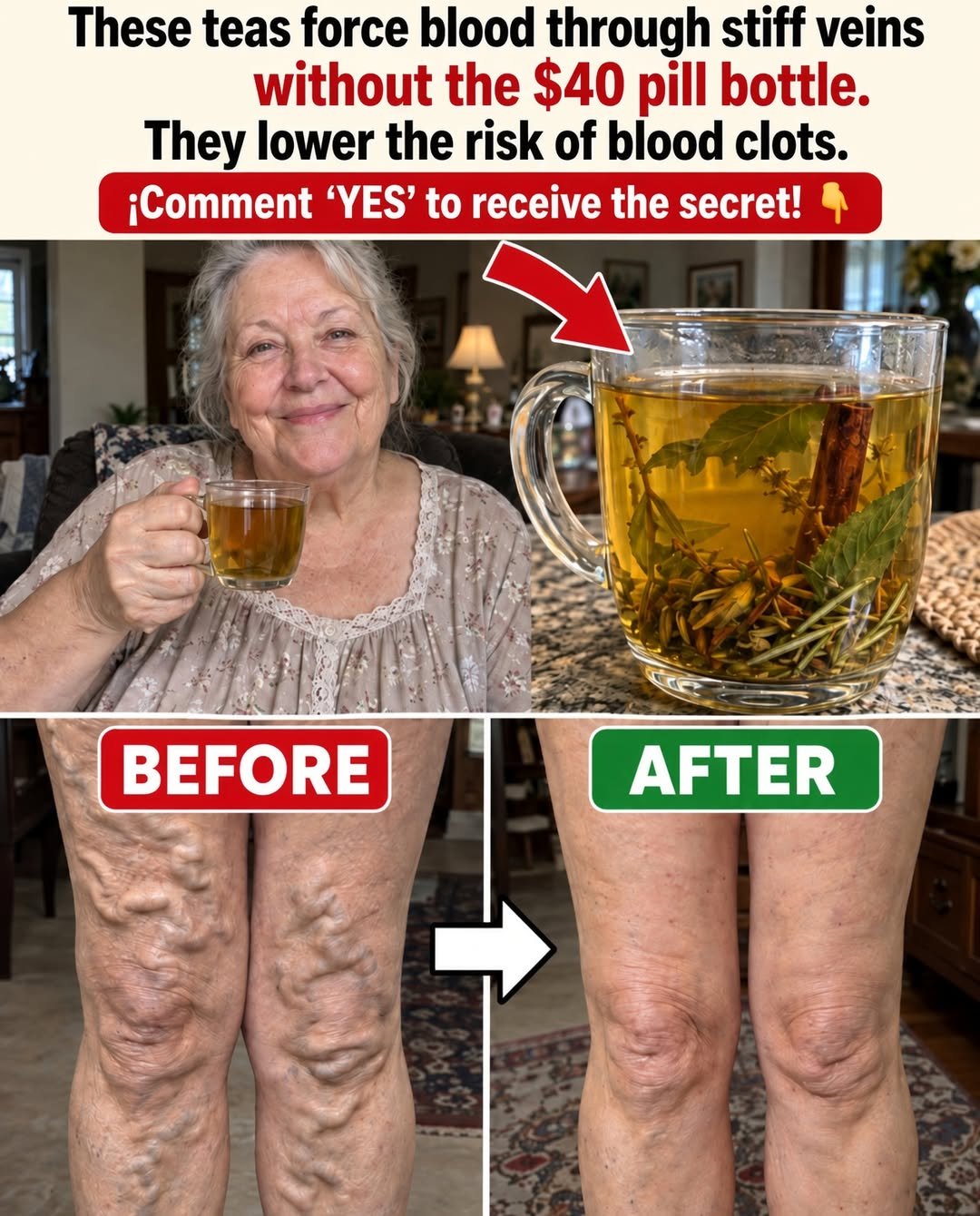
As we get older, taking care of circulation becomes increasingly important. Spending long periods sitting, being physically inactive, dehydration, smoking, excess weight, and certain medical conditions can all affect cardiovascular health. While no tea can literally “force” blood through stiff veins or dissolve a blood clot, some unsweetened teas can be part of a healthy lifestyle that supports hydration and overall cardiovascular wellness.
The most important point is that tea should not replace prescribed blood-thinning medication or medical treatment. If you have been prescribed an anticoagulant or antiplatelet medicine, speak with your doctor before regularly using concentrated herbal preparations.
Here are several simple teas you can prepare at home.
1. Ginger Tea
Ginger is commonly used as a warming herbal drink and can be an easy way to increase your fluid intake.
Ingredients
- 1 small piece of fresh ginger
- 1½ cups of water
- A small amount of lemon, if desired
Preparation
- Wash and thinly slice the ginger.
- Bring the water to a boil.
- Add the ginger.
- Reduce the heat and simmer for approximately 5–10 minutes.
- Strain into a cup.
- Add a little lemon if you enjoy the flavor.
- Allow it to cool slightly before drinking.
Enjoy it without adding large amounts of sugar.
2. Green Tea
Green tea contains naturally occurring compounds called polyphenols and can be included in a balanced diet.
Ingredients
- 1 green tea bag or 1 teaspoon loose-leaf green tea
- 1 cup of hot water
Preparation
- Heat the water until it is hot but not necessarily boiling.
- Place the tea in the cup.
- Pour in the hot water.
- Steep for about 2–3 minutes.
- Remove the tea bag or strain the leaves.
- Drink it plain or add a small slice of lemon.
Because green tea contains caffeine, people who are sensitive to caffeine may prefer it earlier in the day.
3. Hibiscus Tea
Hibiscus tea is naturally caffeine-free and has a pleasant tart flavor. It can be enjoyed as part of a balanced diet, although it should not be considered a treatment for blocked veins or blood clots.
Ingredients
- 1–2 teaspoons dried hibiscus
- 1½ cups of water
Preparation
- Bring the water to a boil.
- Add the dried hibiscus.
- Cover and steep for 5–10 minutes.
- Strain the tea.
- Drink warm or allow it to cool and serve over ice.
If you take medication for high blood pressure, discuss regular hibiscus consumption with your healthcare professional because it may affect blood pressure.
4. Cinnamon and Ginger Tea
This combination makes a flavorful, warming drink without requiring complicated ingredients.
Ingredients
- 2–3 thin slices of fresh ginger
- 1 small cinnamon stick
- 1½ cups of water
Preparation
- Add the ginger and cinnamon to the water.
- Bring everything to a gentle boil.
- Simmer for approximately 5–10 minutes.
- Strain into a cup.
- Let it cool to a comfortable drinking temperature.
Use ordinary culinary amounts rather than concentrated cinnamon supplements.
Simple Daily Habits That Matter for Circulation
Drinking tea alone cannot prevent a blood clot. Your everyday habits are much more important for maintaining healthy circulation.
Try to:
- Drink enough water throughout the day.
- Walk regularly rather than remaining seated for many hours.
- Move your ankles and legs during long periods of sitting.
- Maintain a healthy weight.
- Avoid smoking.
- Eat plenty of vegetables, fruits, whole grains, beans, nuts, and other minimally processed foods.
- Follow your doctor’s recommendations for blood pressure, cholesterol, diabetes, and cardiovascular conditions.
- Take prescribed medications exactly as directed.
If you are traveling or sitting for a long time, getting up periodically and walking around can also help keep your legs moving.
Important Warning About Blood Clots
A tea is not a treatment for an existing blood clot. A clot can become dangerous if it travels to the lungs.
Seek urgent medical attention if you develop sudden swelling, pain, warmth, or redness in one leg, particularly if these symptoms appear unexpectedly. Sudden shortness of breath, chest pain, coughing up blood, fainting, or severe difficulty breathing requires emergency medical care.
The safest approach after 50 is to think of tea as one small part of a heart- and circulation-friendly lifestyle—not as a replacement for medical treatment.
See more on the next page