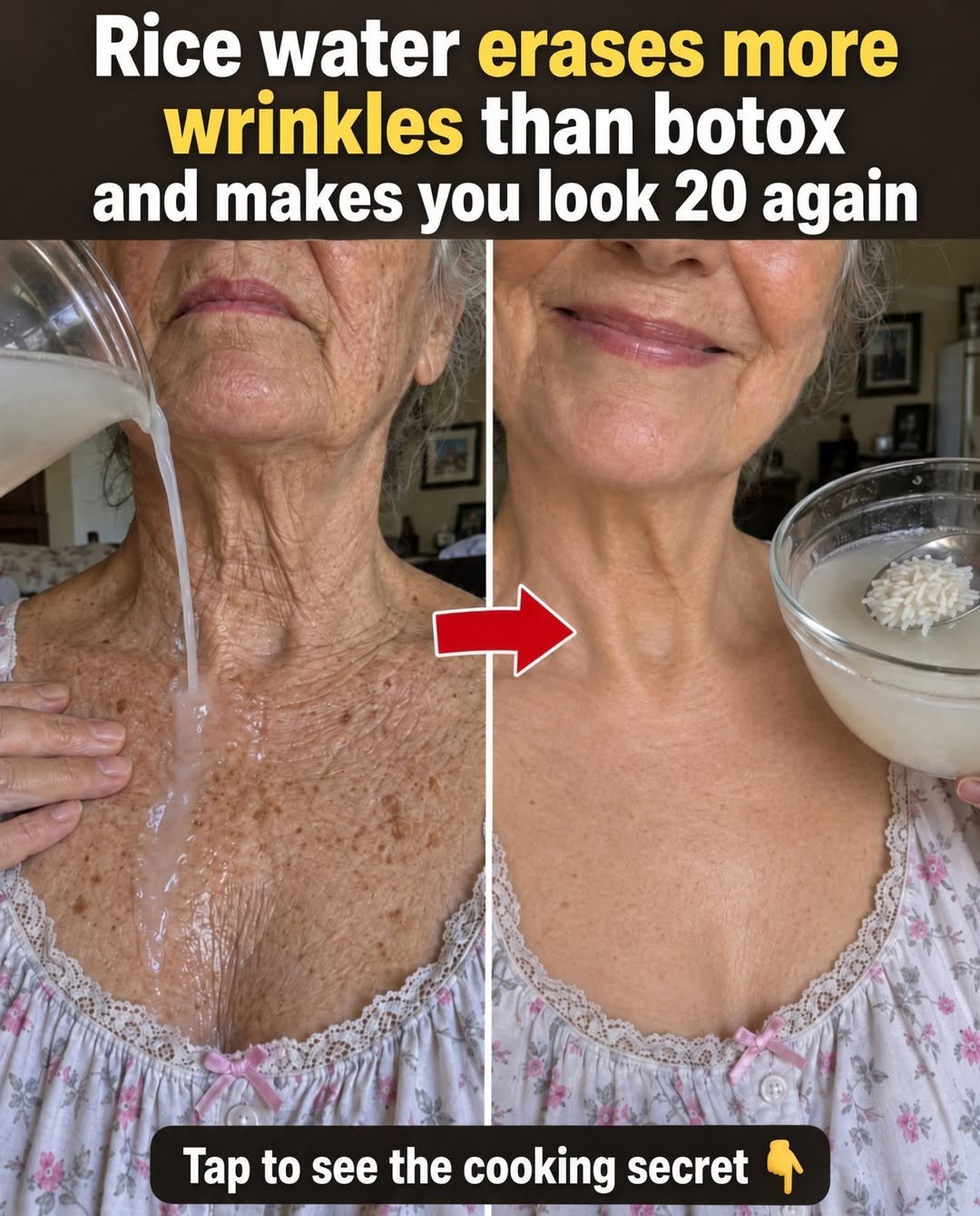
Place the rice in a bowl and rinse it thoroughly with clean water. This removes surface dust and impurities.
Step 2: Soak the Rice
Add the rinsed rice to 1½ cups of clean water.
Let it soak for approximately 20–30 minutes. Stir it gently a few times during soaking.
Step 3: Strain the Rice Water
Pour the mixture through a clean strainer into a clean container.
The resulting cloudy liquid is your rice water.
Step 4: Clean Your Skin
Before applying anything homemade to your face or neck, wash the skin gently with a mild cleanser and lukewarm water.
Pat the skin dry rather than rubbing it.
Step 5: Apply the Rice Water
Dip a clean cotton pad into the rice water and gently apply it to the face and neck.
Avoid the eyes and lips.
Leave it on for approximately 5–10 minutes the first time you use it.
Step 6: Rinse and Moisturize
Rinse the skin with clean water and gently pat dry.
Follow with a simple moisturizer. Moisturizing helps support the skin barrier and can make fine lines appear less noticeable when the skin is well hydrated.
How Often Can You Use It?
If your skin tolerates it without redness, burning, itching, or irritation, you can try it a few times per week.
Do not continue using it if your skin becomes irritated.
How to Store Rice Water Safely
Homemade rice water does not contain preservatives and can become contaminated.
For that reason, prepare a small amount, keep it refrigerated in a clean closed container, and discard it if it develops an unusual smell, appearance, or texture. Avoid leaving homemade rice water at room temperature for long periods.
What Really Helps With Wrinkles?
Rice water can be a pleasant traditional skincare treatment, but it should not be expected to make someone look twenty again.
For reducing the appearance of wrinkles and protecting skin as it ages, the most useful basics are:
- Daily broad-spectrum sunscreen
- Regular moisturizing
- Avoiding smoking
- Adequate sleep
- A balanced diet
- Gentle cleansing
- Evidence-based skincare ingredients such as retinoids when appropriate
If you have sensitive skin, eczema, or another skin condition, test any homemade preparation on a small area first and stop if irritation develops.
Rice water can therefore be enjoyed as a simple cosmetic rinse, but it should not be considered a replacement for proven dermatological treatments.
See more on the next page