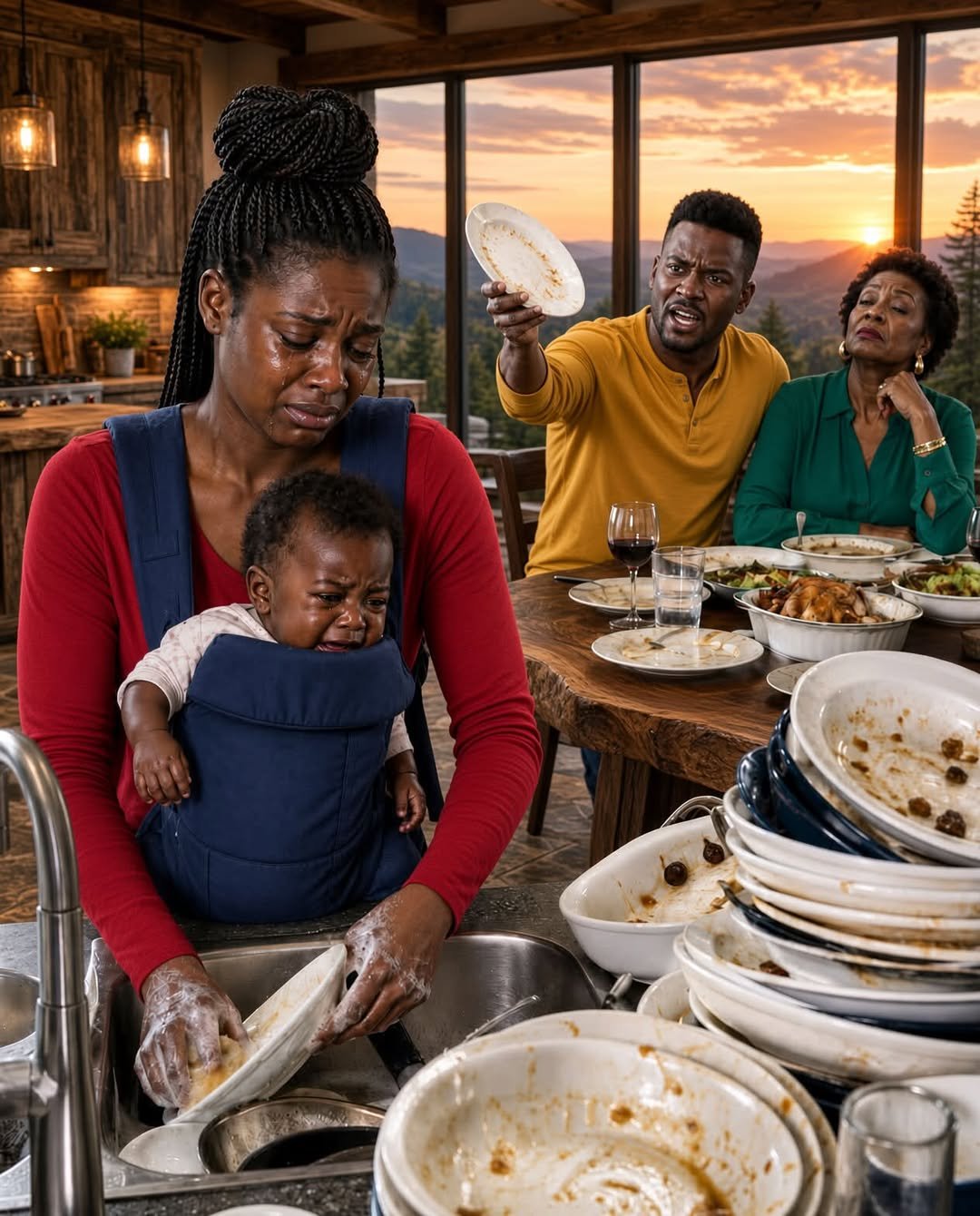
I knew what she was seeing.
The sink.
The table.
The place where I had found her.
“Do you want to leave?” I asked.
She shook her head.
“No.”
We stood there quietly.
Then Emily opened every curtain in the house.
One by one.
Sunlight filled the rooms.
In the guest suite, she found a forgotten bottle of Gloria’s perfume.
She picked it up.
Then laughed.
“What?”
“I spent months feeling like a guest in my own life.”
She put the bottle in a box.
“I’m done with that.”
That afternoon, she ordered pizza.
We ate it directly from the box.
Nobody served anyone.
PART 19 — EVAN’S APOLOGY
Evan’s apology came later than Gloria’s.
It also came with fewer excuses.
He sent it through a co-parenting communication channel after discussing
it with his lawyer and therapist.
Emily showed it to me only because she wanted to.
He wrote that he had confused financial pressure, exhaustion,
resentment, and control with leadership.
He admitted threatening Emily with custody because he knew losing Lily
was her greatest fear.
He admitted grabbing her arm.
He admitted allowing Gloria to dominate the house because confronting
his mother felt harder than criticizing his wife.
Then he wrote:
NONE OF THAT WAS YOUR FAULT. I USED YOUR EXHAUSTION AS EVIDENCE AGAINST
YOU WHEN I SHOULD HAVE HELPED YOU.
Emily read that sentence several times.
“Does it make you feel better?” I asked.
“A little.”
“Do you forgive him?”
“I don’t know.”
“That’s allowed.”
She looked at me.
“I don’t want Lily to grow up hating him.”
“Then don’t teach her hate.”
“I also don’t want her thinking what he did was normal.”
“Then teach her boundaries.”
Emily nodded.
That was the balance she chose.
PART 20 — WHAT MONEY COULD NOT DO
For years, people had treated the Hartwell name as power.
Restaurants.
Property.
Employees.
Trusts.
Lawyers.
That evening taught me the limit of all of it.
Money could provide Emily with counsel.
It could provide temporary housing.
It could pay for therapy.
It could build a trust structure that prevented someone else from
casually selling assets.
But money could not make Emily speak before she was ready.
It could not erase fear.
It could not make Evan become a better father.
It could not purchase healing.
And it certainly could not authorize me to run my adult daughter’s life
because I believed I knew best.
That last lesson mattered.
Control dressed as protection is still control.
So I began asking Emily more questions.
“What do you want?”
“Would you like me there?”
“Do you want advice or just company?”
At first she laughed whenever I asked.
Then she started answering honestly.
Sometimes the answer was no.
I learned to survive it.
PART 21 — THE THINGS I MISSED
My own guilt took longer to understand.
I had been proud of giving Emily space after marriage.
I told myself I was respecting boundaries.
Sometimes I was.
Other times, I used that principle to explain away things that made me
uncomfortable.
She stopped attending our monthly lunches.
Evan always had a reason.
The baby needed routine.
Traffic was terrible.
Emily was tired.
Gloria needed help.
Then Emily stopped answering calls when Evan was home.
I noticed.
I told myself new parents were busy.
At Christmas, she wore long sleeves in a house warm enough to make
everyone else complain.
I noticed.
I did not ask privately.
The mind can turn concern into politeness when the alternative is
frightening.
After Bluebird, I spent months replaying those moments.
My therapist finally asked:
“If you had confronted her six months earlier and she denied everything,
what would you have done?”
“I don’t know.”
“Exactly. You are judging your past self using information you have
now.”
That did not erase responsibility.
It made responsibility useful.
I could not change the missed lunches.
I could change what I did next time something felt wrong.
Ask privately.
Listen without rushing.
Do not demand disclosure.
Do not make someone prove danger before offering support.
And do not confuse an adult child’s privacy with a requirement to ignore
obvious fear.
That lesson changed the way I treated everyone I loved.
PART 22 — THREE YEARS LATER
Three years after I walked into that kitchen, Lily had become a fearless
preschooler.
She climbed furniture.
She asked impossible questions.
She believed blueberries belonged in every meal.
Emily had returned to her career and later moved into a role she chose
for herself.
She was not the woman she had been before Evan.
I stopped wishing for that.
Survival changes people.
So does motherhood.
So does recovery.
The goal was never to rewind her.
It was to let her expand again.
Evan remained part of Lily’s life under the parenting arrangements that
had evolved over time.
His relationship with Emily became functional rather than friendly.
That was enough.
Gloria saw Lily under boundaries Emily accepted.
I remained grandmother, mother, trustee, and occasional unwanted giver
of advice.
The Hartwell Dining Group continued without Evan.
No empire collapsed.
No one became homeless at dessert.
Real consequences moved slower.
They lasted longer.
PART 23 — BEFORE DESSERT
Sometimes people ask what happened “before dessert” because that is the
dramatic part.
Here is the truth.
Before dessert, nobody lost everything.
Nobody was dragged from the house.
No police stormed the dining room.
No lawyer waved a magical document that erased a marriage.
What happened was more important.
Emily said she wanted to leave.
Independent counsel arrived.
Trust professionals began reviewing property and access.
Company systems preserved records.
Corporate privileges stopped being treated as personal possessions.
And for the first time in a long time, Evan and Gloria discovered that
saying something belonged to them did not make it true.
The consequences came afterward.
Through investigation.
Through legal process.
Through board decisions.
Through Emily’s choices.
The phone call mattered.
But not because Daniel Cho had supernatural power.
It mattered because twenty years of careful planning meant that when my
daughter finally whispered yes to Bluebird, there were people and
systems ready to listen.
PART 24 — THE DINNER TABLE
On Lily’s fourth birthday, we had dinner at Emily’s house.
The same dining room.
A different atmosphere.
Lily wore a paper crown.
Emily carried a cake from the kitchen.
I immediately stood.
“Need help?”
She smiled.
“Yes. Plates.”
That one word made me unexpectedly emotional.
Not because she needed me.
Because she could ask.
We brought plates together.
Nobody snapped.
Nobody commanded.
Nobody sat like royalty while another person trembled.
After cake, Lily climbed into my lap.
“Grandma, why are you crying?”
“I’m old.”
Emily laughed.
“You use that excuse for everything.”
“It’s extremely useful.”
Lily accepted this explanation.
Children often accept the simplest truth available.
Adults make life harder.
We confuse access with ownership.
Money with authority.
Providing with loving.
Marriage with permission.
Family with entitlement.
That night, after everyone left, Emily stood beside me at the door.
“Do you remember Bluebird?”
“Every day.”
“I hated needing it.”
“I know.”
She hugged me.
“But I’m glad you answered.”
I held her carefully.
“You answered first.”
She pulled back.
“What?”
“I asked one question. You nodded. Everything after that began because
you told the truth.”
Her eyes filled.
For years, I had imagined myself as the person who rescued my daughter.
That was not quite right.
Emily rescued herself the moment she stopped protecting everyone else
from the consequences of what they had done.
I simply made the call she was too exhausted to make alone.
And that is what I remember most about the night Evan laughed at my
phone.
Not the trust.
Not the company cards.
Not the house.
Not even the look on his face when Daniel walked through the door.
I remember my daughter lowering her eyes when I arrived.
And I remember the day, months later, when she looked directly at me and
said:
“I decide what happens next.”
That was the sentence I had been waiting to hear.
Not because everything belonged to her.
May you like
- My MIL Invited My Fiancé’s Ex to Our Wedding in a White Gown and Mocked My Scars Then My Groom Turned on the Chapel Speakers
- My husband had me sentenced to ten years for a two million dollar fraud I never committed
- MY HUSBAND SAID, “YOU WANTED TO BE A MOTHER, SO ACT LIKE ONE,” THEN LEFT ME ALONE WITH OUR SIX-MONTH-OLD TWINS AND WENT ON VACATION
- My Stepmom Copied the Prom Dress My Dying Mother Made Me Then My Date Put Her Under the Spotlight
- I was nineteen when I promised to wait for him. Fifty five years later somebody knocked on my door holding out a ring that came out of a vending machine.
Because her life did.
THE END
See more on the next page