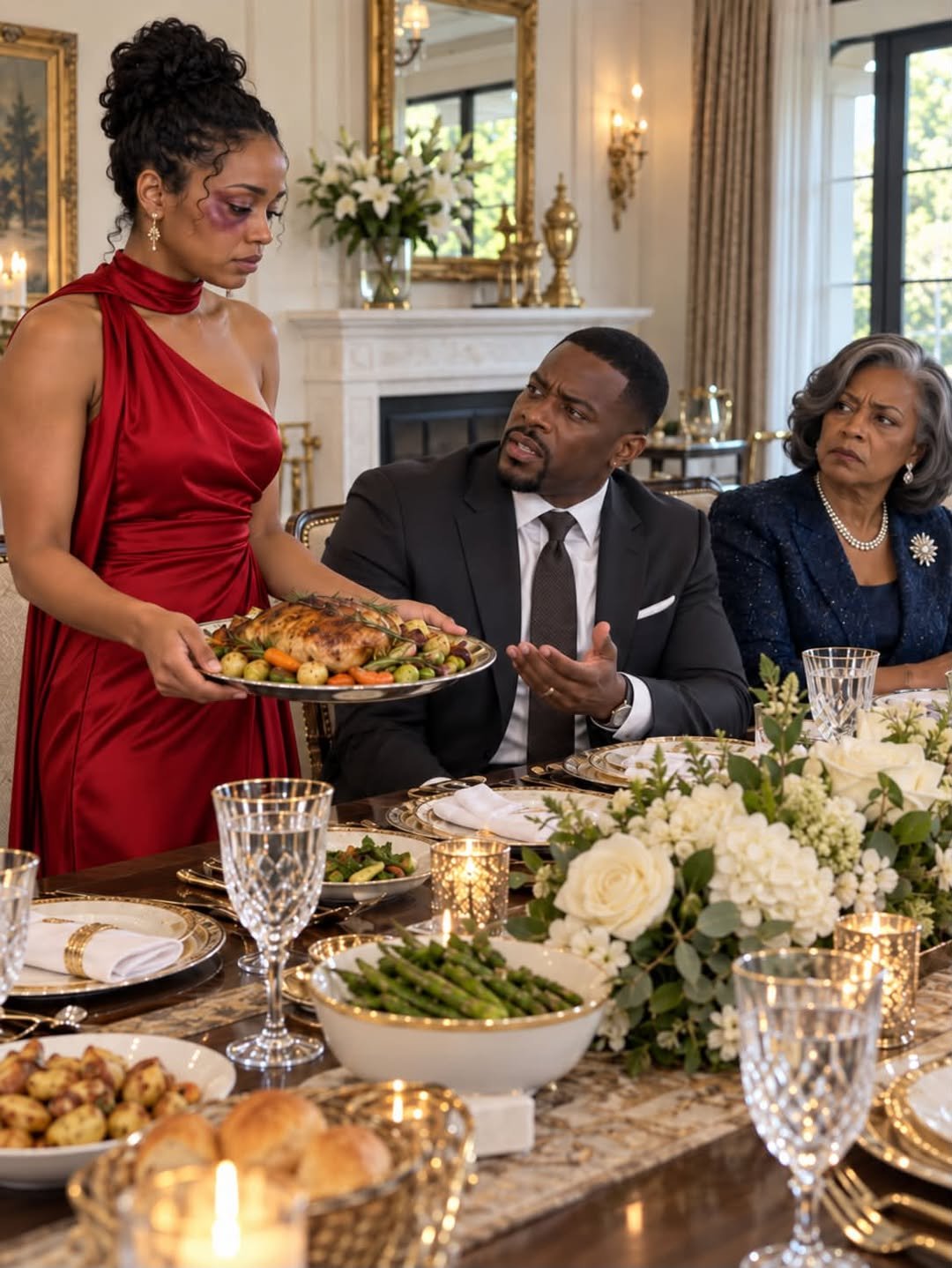
MY HUSBAND HURT ME FOR REFUSING TO LET HIS MOTHER MOVE IN, THEN HANDED ME A MAKEUP KIT: “COVER THAT UP AND SMILE FOR LUNCH.”
I SMILED — BECAUSE I’D SPENT EIGHT WEEKS BUILDING A CASE, AND HE’D JUST HANDED ME THE LAST PIECE OF EVIDENCE.
Chapter 1: The Makeup Kit
My husband hurt me for refusing to live with my mother-in-law. Then he calmly went to bed. The next morning, he handed me a luxury makeup kit and said, “Cover that up and smile.”
My name is Clara. My husband Adrian struck me for refusing to let his mother Victoria move into our home and take control of my life. Then he slept peacefully, and in the morning handed me cosmetics to hide the bruise before his mother’s lunch.
He had no idea what I’d been building. Behind a loose bathroom tile was a burner phone, and on it, three messages: my attorney, my financial advisor, and the private investigator I’d hired eight weeks earlier. “Final evidence package completed.”
He thought everything belonged to him — his house, his money, his name. He was wrong about all three.
I took the makeup kit. But I didn’t cover the bruise. I photographed it and texted my lawyer: “It’s time. Proceed.” And when Victoria arrived expecting my apology, she found my attorney at the table instead.
Chapter 2: The Case I’d Already Built
Let me tell you what Adrian never understood about the wife he thought he owned, because it’s the reason his cruelty became the last piece of evidence in a case that ended him.
Adrian believed he’d married a woman with nothing — dependent, powerless, his to control the way his mother had taught him a wife should be controlled. He’d say it out loud: “Everything you have belongs to me.” He believed it because Victoria had raised him to believe a husband’s dominance was the natural order, and because I had, for a long time, let him believe I was as small as he needed me to be.
I wasn’t. The house he called “his” — I’d put significant money into it, my own money, and I had the records. The finances he thought he controlled — I’d been quietly protecting my own accounts for a year, on my financial advisor’s guidance, the moment I understood which direction this marriage was heading. And the “power” he thought he held over me existed only as long as I let him think the abuse was working.
Because here is the thing about Adrian that I understood before he did: this wasn’t the first time. It had been escalating for months — the controlling, the isolation, Victoria’s poison, the way Adrian’s temper had crept from words toward something worse. And eight weeks before that terrible night, I’d made a decision. I would not spend my life being slowly erased and occasionally hurt by a man who thought a marriage license was a deed of ownership.
So I’d started building. Quietly, carefully, the way you have to when you’re still living in the house with the person you’re documenting. I hired an attorney who specialized in exactly this. A financial advisor to protect and trace my assets. And a private investigator, because I knew that a man like Adrian, protected by money and a mother who’d cover for him, would need to be caught in a way he could not talk his way out of.
For eight weeks, I gathered everything. And the one thing my case still lacked — the thing that would turn a difficult he-said-she-said into something undeniable — Adrian handed me himself, the night he decided that hitting me was a reasonable response to the word “no.”
Chapter 3: The Evidence He Handed Me
I did not fight Adrian that night. I’ve learned that you don’t fight a man who’s already shown you what he’ll do; you document him, and you let the documentation fight for you.
So I photographed the bruise the next morning, in daylight, dated. I preserved everything — the escalating messages, the financial control, the pattern Victoria and Adrian had built over months. I’d already filed the groundwork with my attorney; the injury was the final exhibit. And I made one call, from the burner phone, to a friend who happened to be exactly the right kind of witness, and I filed a police report, because what Adrian did was not a “family matter.” It was a crime, and I treated it as one, calmly, the way I’d been preparing to for eight weeks.
See more on the next page